Electric Mobility Scooters for Adults: A Friendly UK Guide
If you or someone you love is finding walking harder than it used to be, electric mobility scooters for adults can make a real difference. A good scooter means popping to the shops, meeting friends for coffee or enjoying a trip to the seaside without worrying about how far you can walk. But with different classes, sizes and designs to choose from, it helps to know what to look for before you decide.
In this guide we explain the main types of electric mobility scooter, what the UK rules say about where you can use them, and the practical things worth thinking about, so you can choose with confidence.
What is an electric mobility scooter?
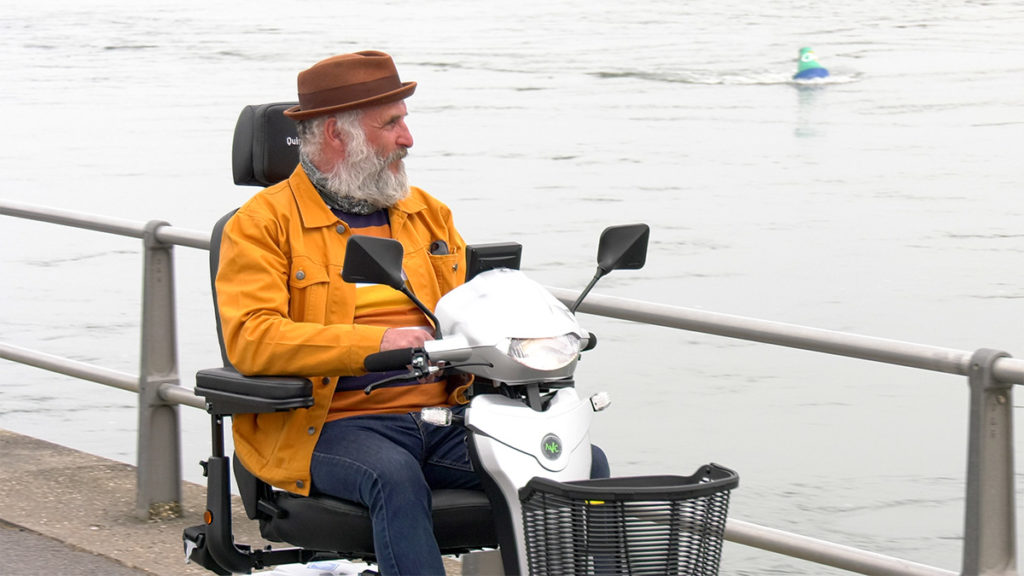
An electric mobility scooter is a single-seat, battery-powered vehicle designed for people who have difficulty walking. You steer with handlebars (called a tiller), control your speed with a simple lever, and sit in a proper seat rather than standing. The batteries are charged from a normal household socket.
The government’s guidance is clear that mobility scooters are intended for people who have trouble walking because of an injury, physical disability or medical condition (with a few exceptions, such as someone taking the scooter for repair or demonstrating it before sale). You can read the full rules on GOV.UK: Using mobility scooters and powered wheelchairs.
Class 2 and class 3 scooters: what’s the difference?
In the UK, mobility scooters are grouped into “classes”. The class affects where you can ride, how fast you can go and whether the scooter needs registering. According to GOV.UK:
| Class 2 | Class 3 | |
|---|---|---|
| Maximum speed | Usually 4mph or less | 8mph (limited to 4mph on pavements) |
| Pavements and pedestrian areas | Yes | Yes, at up to 4mph |
| Roads | No | Yes (not motorways, bus lanes or cycle lanes) |
| Register with DVLA | No | Yes |
| Vehicle tax | No | No, when registered as a mobility scooter |
| Insurance | Not required, but recommended | Not required, but recommended |
To be used on the road, a class 3 scooter must have features such as lights and reflectors, indicators that work as hazard warning lights, a rear-view mirror, an audible horn and an efficient braking system. GOV.UK also says you should be able to read a car number plate from 12.3 metres (40 feet) to ride a class 2 or class 3 scooter.
For a closer look at each class, see our guides What is a class 2 mobility scooter? and 8mph mobility scooters: class 3 explored.
Which type of electric scooter suits you?
Beyond the class, the biggest question is how you plan to use your scooter. Here are the main types, with examples from the Quingo range.
Road-legal scooters for longer trips
If you want to replace short car journeys, visit the next village or tackle hills, a class 3 road-legal scooter gives you more power and range. The Quingo Plus is our entry-level class 3 model, with a 400 watt motor, a top speed of 8mph and a maximum range of up to 30 miles from its twin 50Ah batteries. The Quingo Vitess2 adds a digital dash, upgraded lighting and a deluxe ergonomic seat, while the Quingo Toura2 is our most powerful 4/8mph model, with larger wheels, more carrying capacity and extra-long-range batteries.
Portable scooters for car travel
If you’d like to take your scooter in the car for days out and holidays, a portable model is worth considering. The Quingo Ultra 2 is made from aluminium and can be taken apart and loaded into the boot of even a small car in about 60 seconds. It’s also suitable for getting around indoors as well as outside.
If lifting is a concern, the Quingo Flyte is a self-loading scooter. It loads and unloads itself into a car in under 60 seconds using a removable docking station, so there’s no heavy lifting involved, and you still get the performance of a larger scooter.
Stability and comfort
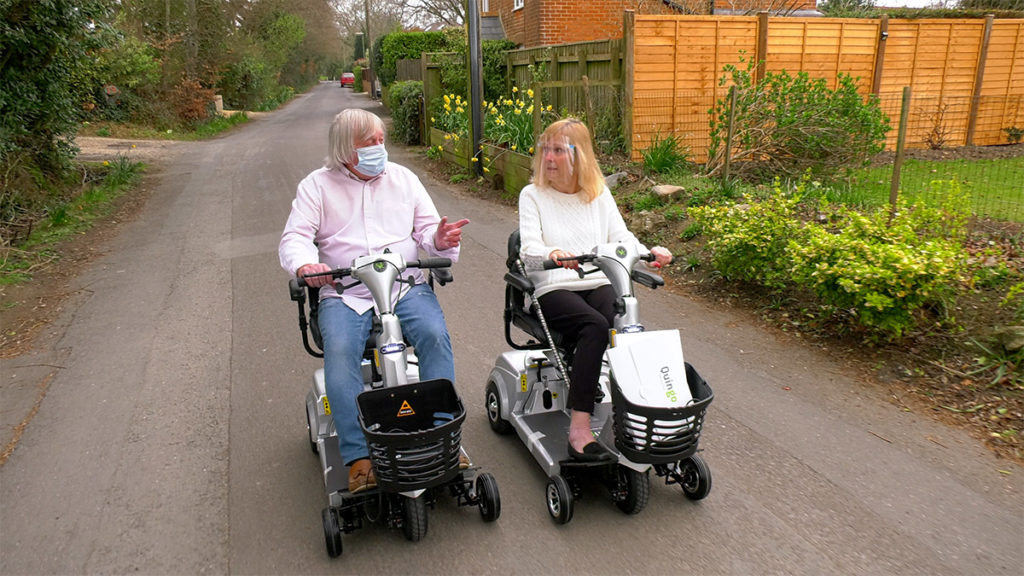
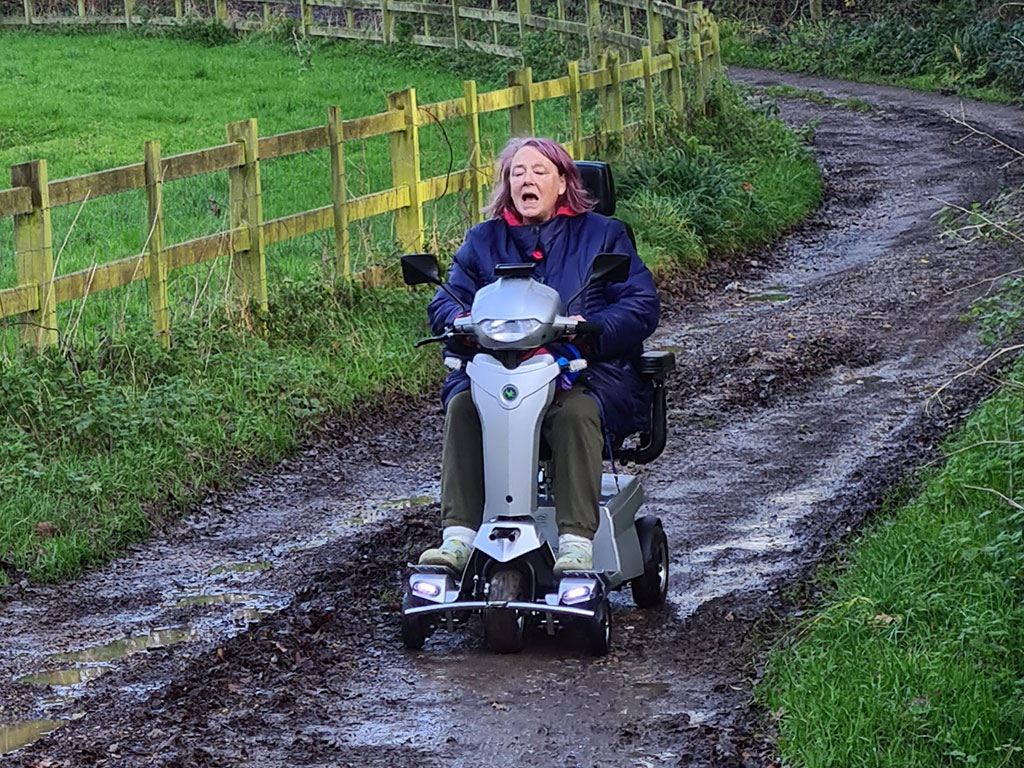
Whichever type you choose, stability matters, especially on uneven pavements, kerbs and slopes. Every Quingo scooter uses our Quintell five-wheel stability system, designed to give a steady, confident ride. Comfort matters too: a supportive, adjustable seat and good suspension make longer journeys far more pleasant. You can read more in Mobility scooters with suspension.
What to look for when choosing
Every person’s needs are different, so it’s worth thinking through these questions, ideally with a family member or carer:
- Where will you ride? Mostly pavements and shops, or roads and country lanes too? This decides whether class 2 or class 3 is right for you.
- How far do you need to go? Think about your longest regular trip and allow plenty of spare range, as hills, cold weather and heavier loads can all reduce how far you can travel on one charge.
- Will it need to go in a car? If so, a portable or self-loading model may suit you better than a larger road scooter.
- Where will you store and charge it? You’ll need a dry, secure space near a power socket, such as a garage, shed or hallway.
- How comfortable is it? Check the seat, armrests and tiller can be adjusted to suit your height and posture.
- What happens after you buy? Ask about servicing, repairs and support, as a scooter is something you’ll rely on every day.
Practical tips for new scooter riders
- Try before you buy. A test drive on your own streets tells you far more than a showroom ever can. Find out what to expect from a home test drive.
- Start slowly. Practise in a quiet, open space before heading into busy areas, and keep to 4mph on pavements.
- Charge regularly. Get into the habit of charging after each outing so you always set off with a full battery.
- Be seen. Use your lights in poor weather and at dusk, and consider a hi-vis jacket.
- Plan for the weather. A canopy or cover keeps you and your scooter dry. Our guide to mobility scooter covers explains the options.
- Keep up with servicing. Regular checks on tyres, brakes and batteries help your scooter last longer. See How long do mobility scooters last?
- Consider insurance. It isn’t a legal requirement for class 2 or class 3 scooters, but GOV.UK recommends it.
Frequently asked questions
Do I need a driving licence for an electric mobility scooter?
No. You don’t need a driving licence for a class 2 or class 3 mobility scooter. GOV.UK says a licence is only needed for vehicles that fall outside these classes, for example ones that can go faster than 8mph.
Can I ride an electric mobility scooter on the road?
Only if it’s a class 3 scooter. Class 3 scooters can be used on roads at up to 8mph, but not on motorways, in bus lanes or in cycle lanes. Class 2 scooters are for pavements and pedestrian areas. Our article Can mobility scooters go on the road? explains more.
Does a class 3 scooter need to be registered?
Yes. Class 3 scooters must be registered with DVLA. GOV.UK says the dealer will usually do this for you when you buy a new scooter, and you don’t pay vehicle tax on a scooter registered as a mobility scooter.
How far can an electric mobility scooter go on one charge?
It depends on the model, the battery and how you ride. Range varies widely between scooters, and things like hills, cold weather and the weight being carried all make a difference. As one example, the Quingo Plus has a maximum range of up to 30 miles.
Is a mobility scooter or a powerchair better for me?
Scooters generally suit people who can sit upright and steer with both hands, and who want to travel outdoors. Powerchairs are often better for indoor use and tighter spaces. Read Should I buy a powerchair or a mobility scooter? for a fuller comparison.
Find the right scooter for you
Choosing an electric mobility scooter is a big decision, and the best way to make it is to try one for yourself, at home, on the routes you’ll actually use. Our friendly advisers can bring a Quingo scooter to your door, answer your questions and help you find the model that suits your needs, with no pressure.
Book your free home demonstration today and discover how much more you could be doing.


